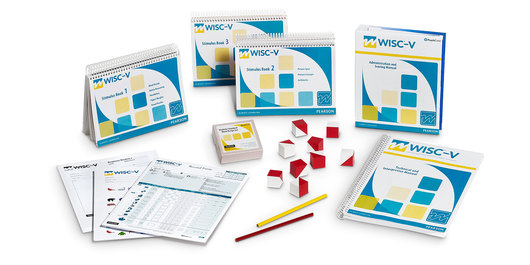
Wechsler Intelligence Scale for Children, Fifth Edition: Australian and New Zealand Standardised Edition
WISC-V A&NZ
Measure a child's intellectual abilityFILTER BY
WISC-V A&NZ Mastery Accreditation · Live Online · 12 Hours
A103000251824
Qualification Level
This live, online, two-day training provides a comprehensive overview of the WISC-V A&NZ administration, including examples of item administration. It will also cover the analysis of strengths and weaknesses at both the subtest and index levels and outline digital approaches to assessment.
The dates below are currently available for this training. We'll be in contact to secure your date and confirm your psychology registration number with the relevant board. Click on view full training details link to see the Prerequisites.
- 15 and 16 October 2026
WISC-V Practice Case Report
A103000413982
Qualification Level
- Publication date:
- 2016
- Completion time:
- Core subtests: 60 minutes
- Administration:
- Individual; Q-interactive - administration and scoring, Q-global scoring and reporting, or manual scoring
- Age range:
- Children aged 6:0 16:11
- Qualification level:
- C

“...when we found his sensory triggers and used his favourite Mario song as a coping tool, everything changed.”
Renee, Psychologist
Introducing the Wechsler Intelligence Scale for Children®–Fifth Edition, the latest version of the most proven trusted cognitive ability measure ever. Available in both a paper-and-pencil format and a digital format on Q-interactive®, the WISC–V delivers more flexibility and more content. It has been redesigned to give you a truly comprehensive picture of a child's abilities and it includes notable improvements to make identifying the issues—and finding the solutions—faster and easier, without sacrificing the Wechsler gold standard of excellence.
Content & Administration
The WISC–V gives you flexibility and interpretive power, along with access to more subtests, so you get a broader view of a child's cognitive abilities. An expanded factor structure provides new and separate visual spatial and fluid reasoning composites for all ages.
New Primary Subtests
- Visual Puzzles is a new Visual Spatial subtest that measures the ability to analyse and synthesise information
- Figure Weights is a new Fluid Reasoning subtest that measures quantitative reasoning and induction
- Picture Span is a new Working Memory subtest that measures visual working memory
Expanded and Updated Factor Structure
The test structure includes new and separate visual-spatial and fluid reasoning composites for greater interpretive clarity and a variety of levels of composites for interpretive options.
WISC-V Test Framework
The WISC-V provides a comprehensive measure of a child’s intellectual functioning across multiple cognitive domains.
Full Scale
| Verbal Comprehension |
|
| Visual Spatial |
|
| Fluid Reasoning |
|
| Working Memory |
|
| Processing Speed |
|
Primary Index Scales
| Verbal Comprehension |
|
| Visual Spatial |
|
| Fluid Reasoning |
|
| Working Memory |
|
| Processing Speed |
|
Ancillary Index Scales
| Quantitative Reasoning |
|
| Auditory Working Memory |
|
| Nonverbal |
|
| General Ability |
|
| Cognitive Proficiency |
|
Features & Benefits
More efficient and user-friendly
- Efficiently produce all primary index scores
- Significantly reduced testing time to obtain the FSIQ
- Simplified instructions with reduced vocabulary level, shorter discontinue rules, and refined scoring criteria
- Five primary index scores, the FSIQ as well as three of the five ancillary index scores can be obtained through the ten primary subtests
More interpretive power
- WISC–V provides statistical links to the WIAT-III, supporting flexible evaluation of specific learning disabilities
- Expanded score analysis approach highlights index- and subtest-level strengths and weaknesses
- Separate visual spatial and fluid reasoning composite scores provide greater clarity
- Expanded process scores enhance interpretation and understanding of performance
Updated psychometric properties
- Updated Australian and New Zealand standardisation sample (ages 6:0–16:11)
- Stratified norms by gender, ethnicity, education, and region
- Improved floor and ceiling sensitivity for a wider range of abilities
- High reliability across subtest and composite scores
Updated studies
- Includes new special group and validity studies
- Comparisons with WISC-IV, WPPSI-IV, WAIS-IV, WIAT-III, KTEA-3, Vineland-II, and BASC-2
- Validity for Q-interactive: construct, equivalence, and group-based comparisons
Users & Applications
Psychologists across schools, clinics, hospitals, and private practice use the WISC–V for:
- Identifying intellectual disabilities
- Diagnosing learning disabilities/disorders
- Evaluating cognitive strengths and weaknesses
- Giftedness assessment and monitoring recovery from brain injury
Earn a Pearson Clinical Badge
Upon completion, you will receive a badge to showcase your skills. With a digital credential, establish yourself as an expert in your field, providing a high level of credibility.
The following resources are available for WISC-V A&NZ:
Special Group Studies
- Q-interactive Special Group Studies: The WISC-V and Children with Intellectual Giftedness and Intellectual Disability
- Q-interactive Special Group Studies: The WISC-V and Children with Specific Learning Disorders in Reading and Mathematics
- Q-interactive Special Group Studies: The WISC-V and Children with Autism Spectrum Disorder and Accompanying Language Impairment or Attention Deficit/Hyperactivity Disorder
- WISC-V Interpretive Sample Report
- WISC-V Score Report
- WISC-V Nonmotor Table
- WISC-V Technical and Interpretive Manual Supplement
- WISC-V Technical Report 1: Expanded Index Scores
- WISC-V Technical Report 2: Testing Children Who Are Deaf or Hard of Hearing
- WISC-V Technical Report 3: Using the WASI-II with the WISC-V
- WISC-V Technical Report 4: Children with Hearing Differences Who Utilise Spoken Language and Have Assistive Technology
- Q-interactive Technical Report 8: Equivalence of Q-interactive and Paper Administrations of Cognitive Tasks: WISC-V
Tests in the WISC-V A&NZ harness the processing capacities of Q-interactive to provide new, more dynamic, cognitively demanding tasks that are unable to be delivered and scored with fidelity in a traditional paper format.
Test Components
Required items for administering WISC-V A&NZ on Q-interactive:
- 9780655796947 Response Booklet 1 - Coding and Symbol Search (Pack of 25)
- 0158978560 Coding Scoring Template
- 0158978552 Search Scoring Template
- 9780655796923 Response Booklet 2 - Cancellation (Pack of 25)
- 0158978579 Cancellation Scoring Template
- 015897946X Wechsler Standard Block Set
Digital Assessment Library
Learn more about our all-access pass to digital assessments.
Support
Existing Users
If you have an active Q-interactive or Digital Assessment Library (DAL) license, WISC-V A&NZ will be automatically added to your account.
Related Items