
The Psychology Digest

  • Call for Proposals

    by

    Call for Proposals

    Pearson invites passionate clinical professionals and educators to join us on a journey to advance our fields and empower the individuals we serve. By submitting your proposal, you have the unique opportunity to help shape the future of clinical practice and empirical knowledge in Autism, ADHD, Dyslexia, Mental Health, Early Childhood, and other focal areas. Your expertise can make a lasting impact—transforming knowledge into meaningful change for clients and inspiring fellow Occupational Therapists (OTs), Speech-Language Pathologists (SLPs), and Psychologists around the world. Become a catalyst for innovation and help drive our community forward.

    Submitted proposals will be considered for inclusion in a variety of Pearson-hosted initiatives, such as upcoming summits, professional development webinars, and other training events. By contributing your insights, you help ensure that our educational content remains relevant and impactful, reaching clinicians and educators in diverse settings and fostering ongoing professional growth.

    Proposal Topics:

    AI Innovation in Clinical Practice: Exploring the integration of artificial intelligence (AI) in clinical settings, including diagnostic tools, personalised intervention planning, data-driven decision-making, and ethical considerations. Proposals may address how AI can enhance assessment, treatment, and outcomes for individuals with Autism, ADHD, Dyslexia, and related conditions, as well as support clinicians in their daily practice.

    Autism: Innovative approaches to assessment, intervention strategies, and support mechanisms for individuals with autism spectrum disorder (ASD).

    ADHD: Latest research and practical applications in the assessment and management of Attention-Deficit/Hyperactivity Disorder (ADHD).

    Dyslexia: Evidence-based practices for the identification and intervention of dyslexia across various age groups.

    Motor Development: Research findings and best practice for screening and evaluating motor skills.

    Sensory Processing: Technology for evaluating sensory profiles, support strategies for neurodiverse individuals, evidence-based practices, sensory-friendly environments, and collaboration across disciplines.

    Mental Health: Innovative, evidence-supported approaches to early identification, intervention, and holistic support for young people and adults, including the use of digital tools, mindfulness, and integrated care.

    Early Childhood: Developmental milestones, current trends in early detection and intervention strategies, and the impact of early childhood education on long-term outcomes.

    Learning: Innovative, evidence-supported approaches to specific learning disorder (SLD) identification and academic skill development, including the use of assessment frameworks, targeted interventions, and data-informed instructional planning.

    Other: If you possess specialised expertise supported by research, we welcome your contributions.

    Submission Guidelines:

    • Proposals must include peer-reviewed research, data, and current references (i.e. within the past 10 years).
    • Content must be applicable to OTs, SLPs, and Psychologists (e.g. school, clinical, neuropsychologists); it may also be relevant to special educators, diagnosticians, and other service providers.
    • Each proposal should include an abstract, long description, learning objectives, time-ordered agenda, instructional level, 3–5 citations (including peer-reviewed journal articles from the past 10 years), and a presenter biography including any relevant disclosures.

    Important Dates:

    • Submission Deadline: 1 June 2026
    • Notification of Acceptance: 30 July 2026
    • Final Presentation Submission: varies based on engagement activity

    Speaker Agreements:

    • A signed speaker agreement will be required to participate.
    • Presentations will be recorded using video conferencing software and will be available for Pearson to use for professional development activities.
    • A speaker honorarium will be provided.

    How to Submit:

    Please submit your proposals via our online form.

    For any queries, contact ClinicalTraining@pearson.com.

    We look forward to your innovative and impactful contributions.

    read more


  • Get Ready for BASC-4: What the Authors Want You to Know About the Latest Edition

    by

    Mental health screening and assessment tools are more important than ever, and one of the most foundational tools—the Behaviour Assessment System for Children (BASC)—is soon to be released by Pearson in its fourth edition. As discussed in a recent episode of Healthy Minds, Bright Futures: How to Navigate Mental Health and Build Support, the BASC-4 includes important updates for clinicians and educators while retaining the evidence-based approach that has made it a trusted and effective suite of resources for nearly 40 years.

    read more
  • Supporting the Spectrum: How To Address Autism and Co-Occurring Conditions

    by

    In recent decades, an increasing number of children have been diagnosed with autism spectrum disorder (ASD) across the U.S. According to the latest CDC data, the number of 8-year-olds identified with ASD is about 1 in 31. However, as discussed on a recent episode of our podcast, “Healthy Minds, Bright Futures: How to Navigate Mental Health and Build Support,” there is more to that number than meets the eye.

    read more
  • The BASC™ Family of Solutions as a Catalyst for Student Growth

    by

    There has been a growing recognition within the education sector, echoed across society more broadly, of the increasing mental health challenges facing students. More children and adolescents are receiving diagnoses, and more schools are reporting a rise in the number of students seeking mental health support services.

    As K–12 educators and clinicians respond to this reality, there has been a corresponding shift in the understanding that timely intervention can significantly influence a student’s academic outcomes and overall wellbeing.

    read more
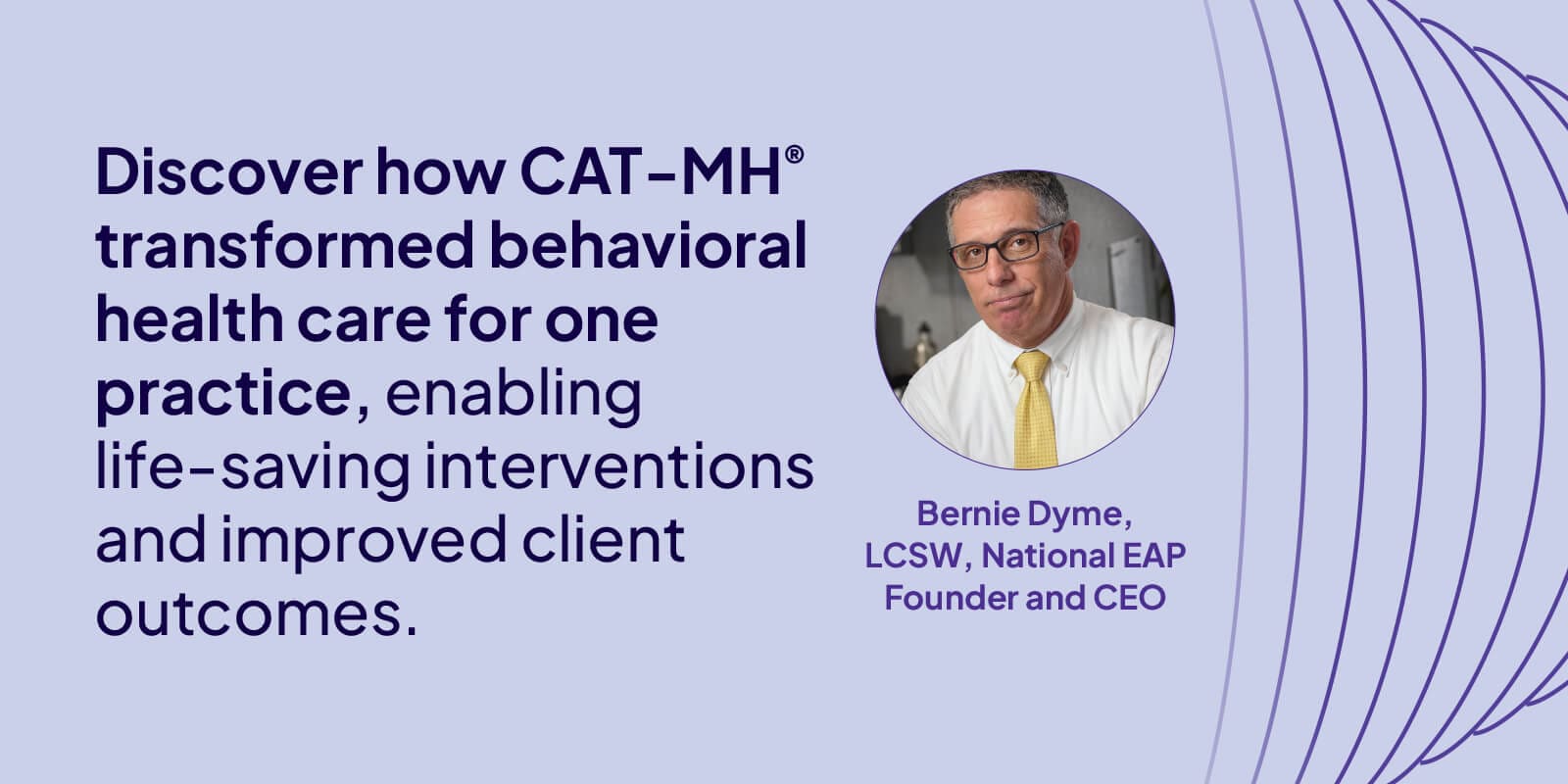
  • Transforming behavioural health care with actionable, timely data

    by

    How CAT-MH® helped one practice save lives

    In the world of behavioural health, every moment counts. When someone reaches out for help, there’s often a narrow window of opportunity—one that can close quickly if the right support isn’t available immediately. For Bernie Dyme, a licensed clinical social worker with over four decades of experience, finding ways to maximise that critical window became essential as his practice grew.

    read more
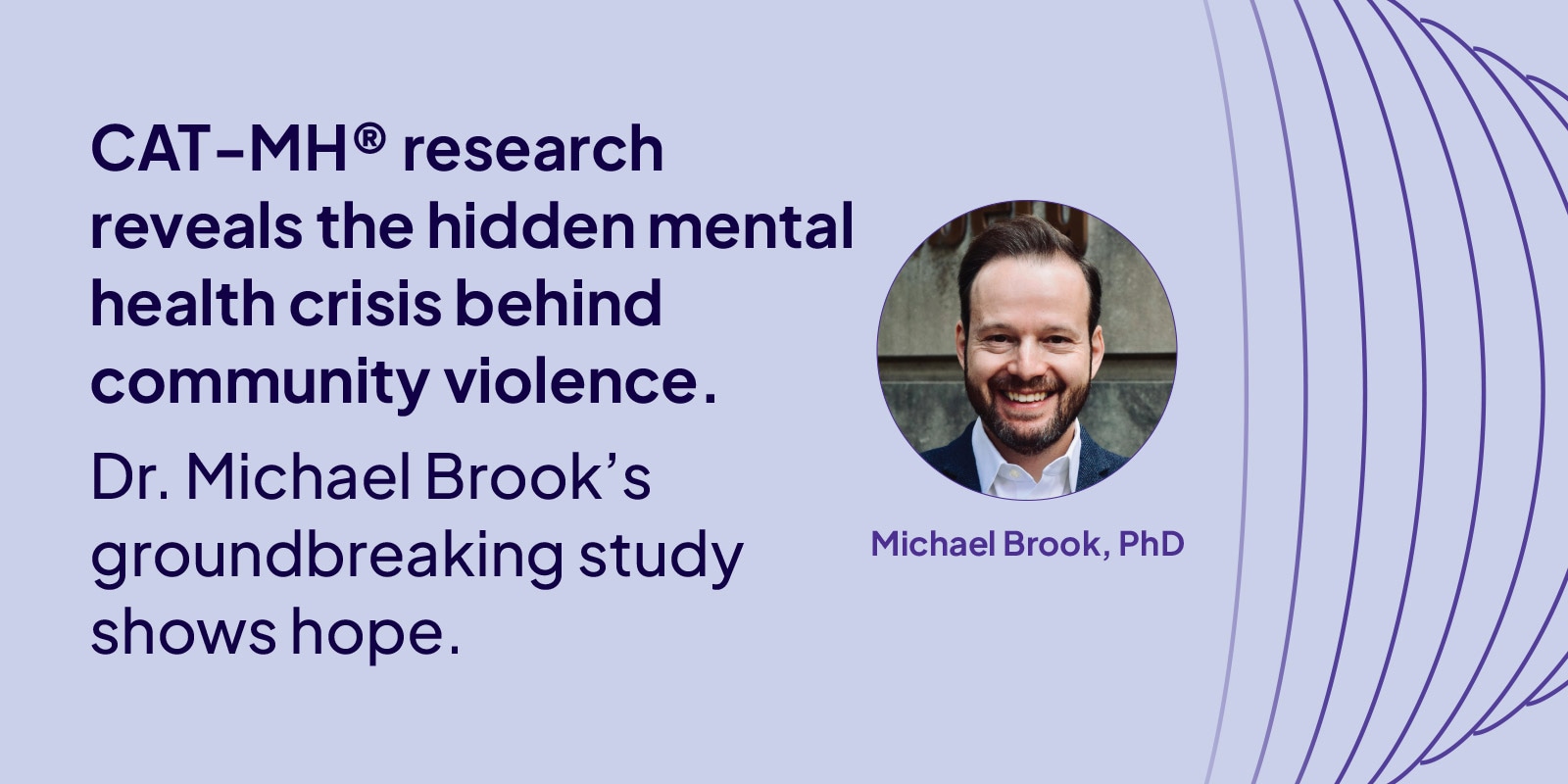
  • Uncovering the hidden mental health crisis behind community violence

    by

    CAT-MH research reveals the hidden mental health crisis behind community violence. Dr. Michael Brook's groundbreaking study shows hope

    What if the young people involved in community violence were just individuals struggling with untreated mental health conditions?

    This question lies at the heart of groundbreaking research that’s changing how we understand and address violence in our communities.

    Dr Michael Brook, associate professor at Northwestern University’s Feinberg School of Medicine, has spent years studying this connection. His work reveals something most people don’t realise: the majority of young people who become involved in community violence have significant histories of trauma, depression, hopelessness, and other mental health conditions that directly increase their risk.

    read more
  • Cognition and memory testing

    by Jennifer Puig, PhD, Research Director

    Elderly couple walking in a park, man with cane, woman in tank top, both focused ahead, surrounded by trees in daylight.

    WAIS®-5 A&NZ and WMS®-5 A&NZ Together to Assess Cognition and Memory

    In the poem “The Blind Men and the Elephant,” by John Godfry Saxe, six men set out to learn about an elephant and all six of them have different perceptions based on the different parts of the elephant they experienced and argued their points mightily. “Though each was partly in the right. And all were in the wrong!” Professionals who utilise psychological assessments in their practice are very much in danger of being ‘partially right but in the wrong’ by limiting their testing to a narrow scope of cognitive functioning. The Wechsler Adult Intelligence Scale®, Fifth Edition – Australian and New Zealand (WAIS®-5 A&NZ) and the Wechsler Memory Scale®, Fifth Edition – Australian and New Zealand (WMS®-5 A&NZ) provide clinicians with a battery of tests that sample a range of cognitive functions and have psychometric properties that allow for the integration of test results across batteries for enhanced interpretations.

    read more